Sunday, February 10, 2013

Window of Opportunity


A famous preacher once said, “To know the will of God, we need an open Bible and an open map.”

His name was William Carey, and he is known as the father of modern Protestant missions. Carey’s work in India in the early 19th century is foundational for the practices and philosophies of virtually every missions organization formed since.

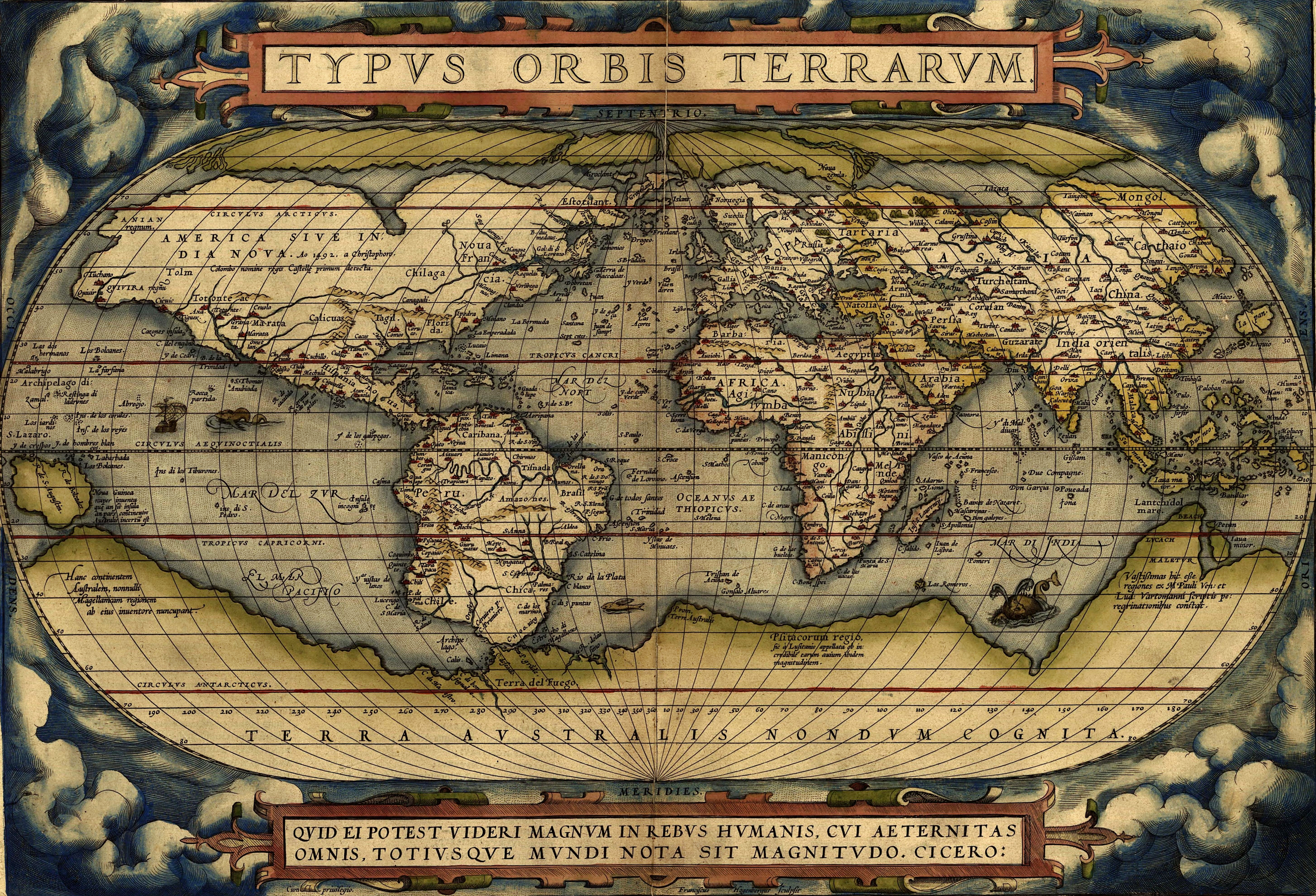
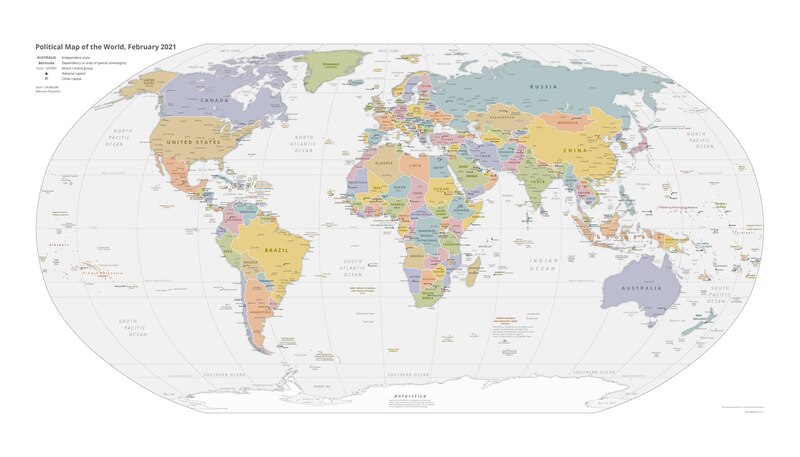
Open a map of the world and look at the Eastern Hemisphere, then chart the region between 10 and 40 degrees north of the Equator. This is the 10/40 Window, and this geographic region is quite possibly the greatest challenge, but also the greatest opportunity, we face as supporters of world missions.

The Window is home to roughly two thirds of the world’s population, more than four billion people, as well as the poorest of the world’s poor; 85% of people in the Window live on less than two dollars a day.

The region also encompasses locations central to the world’s major religions: Islam, Buddhism, Hinduism and Judaism. Many nations within the 10/40 Window are, officially or unofficially, resistant or even hostile toward Christians, the Bible, and Christian literature and teachings.

Ninety percent of the population of the 10/40 Window is unevangelized, meaning they have not heard the Gospel even once. Many cultures within the Window have few to no Christians; therefore they have no context for a Christian movement.

 If all of this weren’t enough of a challenge, of the 55 least evangelized countries in the world, 97% of their population lives within the 10/40 Window, yet only 10% of the global missionary force is working there.

But there is good news. Unreached does not equal unreachable. For example, according to a 2008 study, in 1989 there were only four known Christians living in Mongolia. That country now has an estimated 40,000 indigenous believers.

The efforts of missionaries and native believers in this country reflect another insight credited to William Carey: “Expect great things from God; attempt great things for God.” We can be certain that God is at work in the 10/40 Window, and nothing is impossible for Him!

Last summer, I visited a country in the 10/40 Window: Azerbaijan. This culturally Muslim nation sandwiched between Russia and Iran still bears the scars of Soviet-era oppression and a bloody revolution fought in the early 1990s.

Like many 10/40 nations, Azerbaijan outlaws any evangelism or public expression of Christianity. The missionaries I worked with there use creative access to reach people with the Gospel, through a business they have established in a local community. Even in countries that have restricted and outlawed Christianity, Jesus is still being preached!

If you’re interested in learning more about the 10/40 Window, visit this page for an explanation by missions strategist Luis Bush, who first coined the term and the concept, or The Joshua Project, a world missions initiative to bring Scripture and the Gospel to every people group on earth. Or click here for a short video.

Of his evangelistic work in the 10/40 nation of India, William Carey once said, “I will go down, if you will hold the ropes.” Let’s “hold the ropes” for those God has called to the farthest corners of the unreached world: Pray for the 10/40 Window. Pray for the missionaries serving there, that God would guide and protect them as they advance His Kingdom.

And most of all, pray for the people of this region, that God would break down barriers and open hearts so the lost may experience His love and grace.

Friday, January 25, 2013

Because He Cares


At the end of last month, I had the privilege of attending the World Missions Summit in Fort Worth, Texas, a gathering of over 4500 college students, campus ministers, young adult leaders, missionaries and pastors.

For three days I and my fellow attendees were able to experience international worship, messages from veteran world missionaries, workshops to learn about missions issues and opportunities, and “Windows to the World,” interactive exhibits that let participants explore the global regions where real missionaries are at work.

When asked about half-way through the Summit to describe my experience at TWMS so far, I responded, “It’s like Disneyland for people who love Missions!”

And it was. The elements of this Summit could have convinced even skeptics of the value of supporting missions and missionaries who travel to the ends of the earth to spread the Gospel.

The theme of this Summit was “Because I Care,” an appeal to our compassion to follow God’s call and reach the unreached with His tangible love. This passion for world evangelization was evident in over 900 college students who committed to give a year to serve in World or U.S. Missions after graduation.

But an even deeper overarching theme gradually developed throughout the workshops and messages: the vitality of keeping Jesus central to our lives, our work, and our ministry.

Jesus is the One who calls us to join Him in His mission to bring God’s Kingdom on earth, and this call must be our motivation for all that we do. Though this mission often positions us to help meet the physical needs of others, the fulfillment of those needs cannot be what drives us.

On the first night of the Summit, a missionary to the Sudan named Dick Brogden gave a message on abiding in Jesus, during which he made this eye-opening statement: “Disabuse yourself of the notion that God needs you… We are not needed, but we are invited.”

God can use anyone, or no one, to accomplish His mission; He is God and all things are possible for Him. But He chooses us and invites us to join Him.

Brogden went on to point out that “sin is the universal malady; not all are poor, not all are hungry, not all are sick, not all are trafficked, not all lack clean water or education, but all have sinned and fall short of the glory of God.”

As we strive to live missionally, we must remember that the meeting of physical needs must be accompanied by the communication of the Gospel, or our mission is incomplete. The work of Jesus, on the cross and in our hearts, is what must drive us to reach out to those in need.

In a generation deeply concerned with social justice, we must remember that the greatest injustice is that people die without ever hearing the name of Jesus, the One who can save them from their sin.

Saturday, December 22, 2012

You Were Here (revised)

You were here
one night, in a stable
dressed in rags and
the Glory of Heaven
You came
to dress us in your righteousness; amid
the thickness of life, the heady scent
of sheep and cattle
in the dirt and dark
You were light
among kings and common men
You were Lord and Servant
and all bowed

You were here
You were visible, the image
of the invisible God
the life of stars and hallelujahs
grace of galaxies in the unfurling rose
You were the vastness of the universe
cradled in a mother's arms
You were, and are, the song of angels
the quiet hope of longing hearts
the long-awaited culmination
of all of history
until the moment You were born

You were here
on earth, physical and tangible
the breath of the world in Your human lungs
and the breath of God in Your infant's cry
a human child, the Son of Man
the Living God with a tiny heartbeat
and tiny hands and feet
that would be pierced for our transgressions
the soft downy head of a baby
that would one day wear a crown of thorns
the little chubby arms
that would one day spread wide on a cross
to save the world

You were here
You came
and even if the stars shone brighter
or the roses smelled sweeter
or the bright air was thicker and more humming with life
on the night You came
the world held no beauty but this:

You were here

Missions Connection, Volume IV

 (From Thursday, December 13)

Can you believe there are less than two weeks until Christmas?

If you’re anything like me, you especially enjoy observing children at this time of year. There is something about the way children experience Christmas, the music and decorations, the traditions, and especially when you know a child understands the true meaning of the holiday, that makes the season richer and more wonderful.

As Charles Dickens wrote in his classic novel, A Christmas Carol, “It is good to be children sometimes, and never better than at Christmas, when its mighty Founder was a child Himself.”

It is this time when our Lord was a child that we think most about reaching those children who may not have experienced the unfathomable love that Jesus became a baby so He could show us. Children in Africa are among poorest in the world, with the most limited access to education, food, clean water, and health care. Out of every 10 children in the world living with AIDS, nine live in Africa. This is an area of the world that desperately needs the hope and love of Jesus.

Solid Rock supports two missionary families who work specifically with children and children’s workers in Africa.

Chris and Heidi Ness, along with their children, will begin a new missionary term in Ethiopia in July of next year. This is a nation that has been greatly affected by famines, wars and oppressive regimes in recent decades.

It has begun to recover in recent years, and Christianity flourishes where the seed is planted, but Sunday School teachers and Children’s Ministers have little or no resources to work with. The Nesses have a strong passion to not only train Sunday School teachers and Children’s Ministers, but to provide them with resources in their native language. Visit NessEthiopia.com to learn more about the Nesses and their work.

Doug and Tasha Myers are another missionary family working in Africa. Currently on furlough, they will return to Swaziland in October of next year. Swaziland is struggling with the highest HIV rate in the world, which has resulted in the largest percentage of orphans per population of any country in the world.

Doug and Tasha have a passion for underprivileged children and have been training children's workers in churches throughout the nation. Their mission is to empower the local church in Swaziland to be the hands of Christ extended to their communities. Go to SwaziLife.com to find out more about their mission work.

One of the most effective ways to help a child in need and break the cycle of poverty is child sponsorship. Compassion International is an organization that has been at the forefront of child sponsorship since 1952. Compassion exists as a Christian child advocacy ministry that releases children from spiritual, economic, social and physical poverty and enables them to become responsible, fulfilled Christian adults.

When you choose to sponsor a child, you ensure that that child will have ongoing Christian training, educational opportunities, access to health care, development of self-confidence and social skills, and education in key life skills and vocational programs. You can also specify the age, gender, and region of the world, such as Africa, even to the specific country, as well as other factors that affect your sponsored child.

You may think, “But with so many children in the world who are in need, what difference will my sponsoring one child make?” It may not seem like it means much to help one child in the world, but to that one child, it means the world.

Visit Compassion.com to learn more about sponsorship and their other programs, as well as other ways that you can help children in need all over the world. You can also visit the Guest Services table in the foyer on Sunday to pick up a child sponsorship brochure.

Child sponsorship would make a great Christmas gift for anyone, especially your own children. As we celebrate the birth of one Child, you can be a part of giving the greatest Christmas gifts any child could ever receive—the gift of the Gospel for the sponsored child, and the gift of giving for your own.

May the Word of Christ dwell in you richly and may your life have the greatest possible impact on Eternity, and Merry Christmas!

In Christ,


Rhonda Watts
Missions Coordinator
Solid Rock Community Church

Monday, October 01, 2012

Changing the Map


 When you look at a map of the world, what do you see? 


The political borders drawn by rulers and governments, by wars and treaties? The physical barriers of rivers and mountains, deserts and oceans? Or the histories and diversity of ethnicities and cultures represented by the names of nations?

The global map is a visual record of all these things today, but a thousand years ago, we would have seen it differently. We would have seen not only the world’s physical terrain, but its spiritual geography.

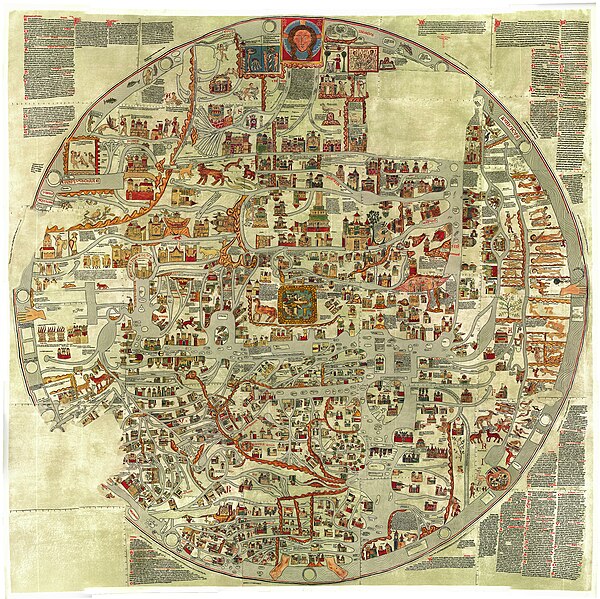
A medieval mappa mundi (Latin for “map of the world”) typically depicted the three continents of the known world, Europe, Africa and Asia, arranged around a central point: the city of Jerusalem. This placement of what, to the medieval mind, was considered the City of God, was symbolic of God’s rightful centrality in the world, and in each person’s life.

Ebstorfer Mappa Mundi, c. 1234


When medieval Europeans looked at maps, they were reminded that this is our Father’s world, and while He plans to one day establish His physical Kingdom here, His spiritual Kingdom is already present.

In his book Mere Christianity, C. S. Lewis compares the Christian to an exile living in enemy territory. He writes of God’s “invasion” of earth through the incarnation of Jesus Christ, and through our own lives when we allow Him to live in us, as a reclaiming of what is already God’s.

The God Who created the world wants it back, and He wants to use us to change the map, to reconcile the earth to Himself. He wants to use us, His followers, to bring His Kingdom to those who have never heard His name, to bring hope and healing to a dying world.

Looking at a map of the world and thinking of the great size, the sheer numbers of people yet to be helped, yet to be reached with the Gospel, our task can seem daunting. Yet when we read the words of Jesus to His disciples in Acts 1:8, we notice that He tells them to begin their ministry in Jerusalem, in their own community.

"You will receive power when the Holy Spirit has come upon you, and you will be my witnesses in Jerusalem and in all Judea and Samaria, and to the end of the earth."


When we let God use us to reach our world, whether by serving in our church; volunteering for a local charity; praying and caring for a sick neighbor; giving to missions; or even intentionally forming a new, Christ-centered friendship, we are helping reclaim the world. We are advancing God’s Kingdom on earth.

We are changing the map.

Wednesday, September 05, 2012

Missions Connection, Volume 1

This is the first of a series of monthly messages I'll be sending to my church. I think it's pretty self-explanatory?


Good morning, Church Family!

I hope you are having a great week!

In my new role as Missions Coordinator for Solid Rock, I am so excited about what God is doing through our church for our world!

Did you know that we as a church give $1500 every month to local and world missions? Your faithful and consistent giving allows us to support missionaries around the globe.

Here are just a few other facts about our missions giving:

  • We give $100 a month each to 15 missionary families.
  • Our missionaries are located all over the world, from Ecuador, to Scotland, to the Philippines, to right here in Washington state.
  • We support several missionaries who serve in restricted or hostile nations, where it is dangerous or even illegal to gather with other Christians, talk about the Christian faith, or even own a Bible.
  • While our financial support is of great value and very much appreciated, what missionaries request most is prayer for their families and ministries. There are no limits to what the power of God can do through prayer!

Jesus’ last words to His followers on earth were to spread the Gospel throughout the whole world. While we’re not all called to be overseas missionaries, we are all called to live missionally, and we are all able to support the efforts of those who are bringing the Good News to the ends of the earth!

If you don’t already, I encourage you to pray for our missionaries and to prayerfully consider giving to missions at Solid Rock. If you would like more information about giving to missions or the missionaries we support, please reply to this email.

In the coming months, I will be profiling some of the individual missionaries we support and highlighting the diverse and creative ways they are sharing the Gospel. I’ll also be sharing information about some mission trips we’ll have in the works for you to take part in.

Also, be sure to keep an eye out for the Missions Table, coming soon to the foyer on Sunday mornings!

I pray that the word of Christ would dwell in you richly and your life on earth would have the greatest possible impact on eternity.

In Christ,

Rhonda Watts
Missions Coordinator
Solid Rock Community Church

Tuesday, August 28, 2012

"Which is the Heroine?"

Do not be in a hurry to marry
but neither dismiss the state;
your words and your kindnesses will have their weight
whatever name you bear

Speak softly in the morning,
but when evening feathers the trees,
look up to the sky with an eye for music
and shout your joy
while stars and streaming faithfulness
gather in your hands

Find an occupation
to busy your hands and your mind and your heart:
the care of a child or the care of a country;
both will do their part to improve the world

Tread gently on winter afternoons
when grey light splinters the snow,
but in summer, drink in the sun through your fingertips
and leap through silver streams
while Providence and darting minnows
rush over your feet

Friday, June 22, 2012

Love is Pain

(a poem for Good Friday)


You on a dark
long road
the black hanging shapes
of clouds and branches before you
the stones beneath your
feet pressing into your flesh
night and desperation thundering in
your ears and
heart

The burden splintering
burying itself in your shoulders
leaving red tracks in the gathering
dust

          A tree planted in the earth
          gives life:

          Dead limbs
          with nails hold
          living limbs

You on a dark
heavy cross
the black hanging shapes of
fear and death
collecting blood in the dirt under
your pierced feet
love and desperation rising from
your mouth and
heart

The sun shattering
burying itself in the ground
leaving red streaks in the brightening
sky

Saturday, March 31, 2012

Nomad

(a poem for Lent)


She considers that the one who has promised is faithful
and, knowing herself to have been born into exile,
follows a flame through the wilderness
in search of a homeland she does not know.

She considers that the one who has promised is faithful
and, finding herself in possession of a vow that even death cannot break,
lingers in valleys and green canyons
on a path of living footprints through the desert.

She considers that the one who has promised is faithful
and, letting herself see with eyes unadjusted to the light,
wanders past trails and stars and roadsigns
against the gentle beckoning of her birthright.

She considers that the one who has promised is faithful
and, filling herself with the ages-old tears of fellow travelers,
stumbles through mist and glass and darkness
toward a hope unseen and out of earthly reach.

She considers that the one who has promised is faithful
and, giving herself to the ground and the call of a voice beyond death,
impels hand- and tear- and blood-washed feet to run over dust and stream
until


Friday, December 09, 2011

You Were Here

(a poem for Christmas)


You were here
You were visible, the image
of the invisible God
You were a baby
a human child, the Son of Man
the Living God with a tiny heartbeat
and tiny hands and feet
that would be pierced for our transgressions
the soft downy head of a baby
that would one day wear a crown of thorns
the little chubby arms
that would one day spread wide on a cross
to save the world

You were here
on earth, physical and tangible
the breath of the world in Your human lungs
and the breath of God in Your infant's cry
You were the vastness of the universe
cradled in a mother's arms
You were, and are, the song of angels
the quiet hope of longing hearts
the long-awaited culmination
of all of history
until the moment You were born

You were here
You came
and even if the stars shone brighter
or the roses smelled sweeter
or the bright air was thicker and more humming with life
on the night You came
the world held no beauty but this:

You were here

Tuesday, October 04, 2011

Help a Girl, Change the World.


The world is broken. We know that. We also know that God has called us to bring His Kingdom on Earth, to help the poor and the needy and the lost, to "speak up for those who cannot speak for themselves" (Proverbs 31:8).

But the problems in this world are so many and so daunting and huge, where do we even start? The answer: girls. Take a look at these stats, courtesy of The Girl Effect:
  • When a girl in the developing world receives seven or more years of education, she marries four years later and has 2.2 fewer children.
(United Nations Population Fund, State of World Population 1990.)

  • An extra year of primary school boosts girls’ eventual wages by 10 to 20 percent. An extra year of secondary school, 15 to 25 percent.
(George Psacharopoulos and Harry Anthony Patrinos, “Returns to Investment in Education: A Further Update,” Policy Research Working Paper 2881[Washington, D.C.: World Bank, 2002].)

  • Research in developing countries has shown a consistent relationship between better infant and child health and higher levels of schooling among mothers.
(George T. Bicego and J. Ties Boerma, “Maternal Education and Child Survival: A Comparative Study of Survey Data from 17 Countries,” Social Science and Medicine 36 (9) [May 1993]:1207–27.)

  • When women and girls earn income, they reinvest 90 percent of it into their families, as compared to only 30 to 40 percent for a man.
(Chris Fortson, “Women’s Rights Vital for Developing World,” Yale News Daily 2003.)

Think about it: girls are future mothers, as well as future community leaders, all over the world. Invest in a girl, provide healthy food and a safe place for her to live and send her to school, and she will grow up educated and strong and healthy, capable of raising healthy children, when she is ready to have them, and able to earn her own money and lead her community wisely.

This is true in the developing world, and also in our own country. We think abortion rates are a problem, but they are only a symptom of an even worse problem: the lack of a safe, nurturing environment and quality education for far too many children. Girls who grow up in poverty, social or domestic turmoil, and in a less-than-quality school are far more likely to drop out of school and get pregnant too young, and then to abort their pregnancies. If we want to see abortion rates drop, legislation prohibiting abortion is not going to help very much; we have start at the source.

Abortion is just one issue that can be positively affected by investing in girls. Just think: if every girl in the world between the ages of five and 10 right now were living in a safe and loving home, getting healthy meals and medical care and attending school, and it was guaranteed that they would all stay that way, the world would start to look a little different in a few years. Teen pregnancy and child marriage would drop dramatically, as well as human trafficking and slavery. In 10, 15, 20 years, virtually every child born would be a wanted child, a healthy child, a loved child. Communities all over the world would be safer, stronger, healthier. The world would be better.

Sounds great, doesn't it?

But it's not that easy. There are more than 600 million girls in the developing world alone. This is a Big Job. We can't change the world all at once, but as we serve God through serving the poor, together, we can change the world one girl at a time.

Monday, September 26, 2011

The Problem

I find religions fascinating, and I have a sort of hobby of studying different religions. In studying any religion, my main question is always the same: since we recognize that there is this problem of evil in the world, what does this religion say is the solution to that problem? We know that there is something wrong with the world and with humanity, so how does this religion propose to repair that damage?

We all have to realize that there is something wrong with the world, that it is not as it was meant to be; we have to know this because we see crime and disease and poverty, we see people suffering and it makes us angry, it makes us want to fix it. Why would we have doctors if sickness was supposed to exist? Why would we have laws and a justice system if it was OK for people to steal and cheat and take advantage of one another? Why would we crave justice, or even be able comprehend the ideal of justice, if there wasn't something that told us it could exist, even though we don't often see it in the world?

And we have to realize that there is something wrong with us as humans, not just criminals, but all of us; we have to know this because we've noticed that sometimes even when we know what the right thing to do is, we don't do it, and sometimes even when we know something is wrong, we still do it. So we have to realize that there is something wrong with us. And we may even realize that if we could fix what's wrong with us, maybe that would get us closer to fixing the world.

I've found that the mistake many religions make is in trying to fix the problem with actions, doing good things to make up for the bad things we've done. But there is a fatal flaw in this thinking: the root of the problem is not in our actions. The bad things we do are not the real problem; they are a symptom of the real problem: our selfish nature. So, since the problem doesn't come from our actions, it can't be solved by our actions, either. Since the problem is in our internal nature, it has to be solved by changing our internal nature.


So how do we do that?

Saturday, August 20, 2011

Wednesday, July 13, 2011

The Human Story: a Review of "Havah" by Tosca Lee

This re-imagining of a biblical tale is, at its heart, the story of God's relentless love for humanity.

When an author novelizes an already well-known story, especially one as ingrained in both secular and Church culture as that of the world's first woman, she takes a huge risk. Virtually every reader who picks up the book will have preconceived ideas about Adam and Eve, the Garden of Eden, original sin, and primeval history that they'll, consciously or sub-, be expecting to see verified. This is the risk that Tosca Lee has taken withher novel Havah: the Story of Eve.

In her author's note, Lee acknowledges the familiarity most readers already have with the story and explains her choice to use the characters' Hebrew names in an effort to distance her retelling from our expectations. Eve becomes Havah, though Adam's name stays the same, and their sons become Kayin (Cain), Hevel (Abel), and Shet (Seth).

The beginning of the novel introduces a problem: how do you describe a place that only two people in the history of the world have ever seen? Lee's solution is rather simple: there isn't a whole lot of description, and I think that was the right choice. Describing the Garden of Eden would be like trying to describe Heaven, though to a lesser degree: too prone to cliché and abstract to be really satisfying. It is enough to know that it is a perfect place, where the relationships between God and human, man and woman, are pure and untainted, honest and beautiful. Just enough of this state of perfection is shown to make us feel the loss of it.

The point at which the story changes from that of two people and their Creator in Paradise tothat of the world as we know it is, of course, the Fall. This is really the climax of the novel, though it is only 60 pages in. Up until now, we have only been given glimpses of the woman's desire for knowledge and understanding of God and snatches of her conversations with the mysterious serpent, who seems to be the only other creature who has the same curiosity that she does; it is this curiosity and desire for knowledge that in the end motivate her to eat of the tree.

But I couldn't understand, solely based on the content of the novel, why two people who have a literally perfect life would so easily go against the wishes and warnings of the One who gave them life. Of course I know that Adam and Eve did sin, but if I hadn't known the story before reading the book, the book wouldn't have convinced me.

If the build-up was slightly lacking, though, Lee makes up for it in the riveting moment itself. In the novel, as in the Genesis account, the man is present the whole time for that fateful scene—he witnesses the woman's conversation with the serpent and sees her grapple with the decision to eat the fruit. He even almost encourages her to sin in the fictional account, putting the decision for both of them into her hands and saying, “We are one flesh. We live or die the death together.”

That's probably not exactly how it went down, but it is effective in showing that the blame for the first sin is shared equally between the two genders. Gender equality is something that Lee acknowledges in her author's note was important for her to show in the novel, an equality “designed by God, recorded by the Genesis author and influenced—for good or ill—by the world.”

The man and woman's equality is marred by the Fall—though still equal, they can never understand each other the way they used to. This state of misunderstanding unfolds with gradual heartbreaking realization, their separation from each other almost as devastating as their exile from the Garden and the continual, tangible presence of their beloved Creator. The lightning storm and earthquake that accompany their flight from the Garden are the violent physical manifestation of the breaking heart of God.

The remaining three quarters of the novel in a way function as a fictionalized account of the first thousand years of human history. It's fascinating to watch the development of human invention, to see the advancement of ideas and technology in agriculture, in writing, in metal working and city-building. But through it all there is woven a thread of darkness, the shadow of the Fall. This darkness is witnessed in Kayin's murder of his brother Hevel and in the barriers it places between Kayin and his family. The darkness is also seen much later when people begin to corrupt the worship of the One true God, and even to worship false gods.

Havah never forgets that the world is not as it should be, and that it was her decision that made it that way. But she also never gives up hope that the world will be restored. In a dream near the end of the novel she has a glimpse of how that restoration is to come about: she watches as an animal sacrifice burns on the altar, then changes into a man, “Adam made new. As I stare, he plucks from the shrub the small fruit,” the fruit of the tree that gives eternal life.


Wednesday, June 08, 2011

Reappropriation of the Third Reich

Hitler and Eva Braun in 1942
(Photo courtesy of the German Federal Archive)


If you have ever watched anything on YouTube, you probably at least know about the Hitler videos. You know, those videos where Hitler finds out that Santa isn't real, or gets banned from Xbox Live, or is disappointed with his new iPad--and then rants and raves about his misfortune. Those parody videos that have taken a scene from a film that is conveniently in German, so the parodists can write whatever they want in English subtitles.

The film is 2004's Downfall (Der Untergang in German), and it depicts the last days of Hitler's Third Reich in a bunker in Berlin:


The scene that most of the parody videos use is one in which Hitler finds out that a key piece of his battle plan has not fallen into place, and at this point he is a fair way into realizing that he will ultimately fail. What's interesting about the parodies is that most of them have retained that sense of failure. This one is one of my favorites, because it's kind of meta:


These parodies are pretty funny, I think, but why are they so funny, and so popular? What is so compelling about this idea of taking one of the most hated men in history and putting ridiculous and petty words in his mouth? Is it the ridiculousness itself?

After a bit of research and thinking, I've synthesized that comedy often springs from the juxtaposition of two vastly different ideas or concepts, with the implication that the two ideas are related somehow. So, you take Adolf Hitler, universal symbol of fascism and genocide, and make him throw a tantrum over, not losing his long and bloody war fueled by racism and the ignorance and fear he deliberately fostered in his people, but over his iPad. Boom! Comedy.

In the nearly 70 years since the fall of the Third Reich, the world has become somewhat desensitized to the horrors of that time. Many of those now living who were alive back then were likely too young to grasp the full magnitude of the evilness of this idea, that an entire race of people should be brutally murdered solely because of their heritage, and the desolation and violence that that idea wrought as it spread.

We are far enough removed from that time that we can make jokes about it; we can make Hitler a buffoon and a cult figure, make him yell at Kanye West and Lady Gaga and his mother for lying to him about Santa Claus. We are even far enough removed that people have begun to use Hitler's name and the terms "fascist" and "Nazi" as ill-fitting insults, as (a re-subtitled) Hitler finds out:


In his review of Downfall, Roger Ebert commented, "As we regard this broken and pathetic Hitler, we realize that he did not alone create the Third Reich, but was the focus for a spontaneous uprising by many of the German people, fueled by racism, xenophobia, grandiosity and fear. He was skilled in the ways he exploited that feeling, and surrounded himself by gifted strategists and propagandists, but he was not a great man, simply one armed by fate to unleash unimaginable evil."

The power of evil lies in fear. As time has passed and the world has changed and we have begun to laugh, the memory of that particular fear has faded, stripping that evil of its power. Hitler parodies are not evidence, then, of a desensitization, or not only that, but evidence that the world, in some small way, has healed.

The film's director, Oliver Hirschbiegel, responded positively to the parody videos being made of that famous bunker scene, saying, "The point of the film was to kick these terrible people off the throne that made them demons, making them real and their actions into reality. I think it's only fair if now it's taken as part of our history, and used for whatever purposes people like."

Hitler will always be a part of history, like Napoleon and Alexander the Great. And like those other two would-be world conquerors, there may come a day, albeit probably very far in the future, mind you, when people forget to hate him. For now, we have a way of humorously expressing common problems in life and our opinions on society and culture.

As a commenter on one of the videos on YouTube, under the name FortitudeOfHeaven, so aptly put it, "Hitler has now become our internet social/political commentator on current events for years to come. His episodes frame the frustrations we face from the setbacks of our time."

And yes, I would kill Hitler for a hot dog.

Friday, May 13, 2011

Bear Witness*


A tree is a banner,
each leaf a flag,
a standard bornewith bud upon root
and grace upon grace,
the Spirit that seeps into the ground
to make things grow: the light, the heat
that makes you new
makes every breath a love song and
the stars cry glory and
a baby's laughter echo across the universe,
thunder in a bluebell,
soul in the dark,
a grave in the sky;
tells your eyes what your heart's been missing.


*The title of this poem was inspired by a prayer from Saint Augustine called "The Beauty of Creation Bears Witness to God." This is the prayer:

Question the beauty of the earth, the beauty of the sea, the beauty of the wide air around you, the beauty of the sky; question the order of the stars, the sun whose brightness lights the days, the moon whose splendor softens the gloom of night; question the living creatures that move in the waters, that roam upon the earth, that fly through the air; the spirit that lies hidden, the matter that is manifest; the visible things that are ruled, the invisible things that rule them; question all these. They will answer you: "Behold and see, we are beautiful." Their beauty is their confession to God. Who made these beautiful changing things, if not one who is beautiful and changeth not?


The poem itself was inspired by Psalm 19:1 ("The heavens declare the glory of God; the skies proclaim the work of His hands."), Romans 1:20 ("For since the creation of the world God's invisible qualities--His eternal power and divine nature--have been clearly seen, being understood from what has been made, so that men are without excuse."), and a really, really big tree that I saw the other day.

Tuesday, May 03, 2011

Handmade Blogging

I was feeling crafty the other day, so I pulled out my mom's scrapbooking supplies and an unused composition book and made this:


I thought this verse was perfect for a writing notebook: "You are a letter from Christ, written not with ink, but with the spirit of the living God." (2nd Corinthians 3:3)


I made a pocket inside the back cover...


And a ribbon bookmark.


The interwebs are OK, but right now I'm really excited to write in this notebook by hand!

Friday, April 29, 2011

It's a Nice Day for a Royal Wedding

The alarm goes off at 3:30 a.m. I roll over, feeling as if I've just fallen asleep a moment before. I stumble out from under the covers, eyes barely open, and pull on my slippers and tiara. I love weddings, I'm slightly obsessed with royalty, and I'm more than a bit of an Anglophile; for me, today is like the Superbowl, the World Series and the Twilight premiere all rolled in to one.

I didn't wake up early enough to see the beginning of the wedding (1:30 a.m.? No thank you), so everyone is already in the church. That archbishop is kind of long-winded, but check out Westminster Abbey! Why would anyone want to be married anywhere else?

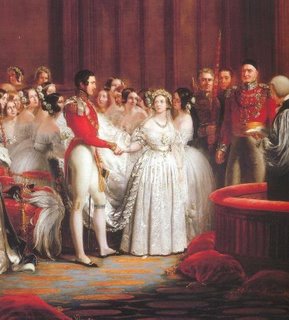
Queen Victoria and Prince Albert were married in the chapel at St. James' Palace in London, which is OK, I guess. In their time there hadn't been a wedding at the Abbey in over 400 years, since Richard II in 1382. The tradition was revived in the 1920s, and almost every major British royal wedding has taken place there since. Every coronation since the Abbey's construction has taken place there, too.

I shuffle into the kitchen and try to make some tea (keeping with the British theme, of course) with my fancy new French press tea pot (birthday gift--in fact, I've decided that the royals planned the wedding on this date as their celebration of my birthday, which is only two days away). My sleep-addled brain can't figure out how the tea pot works, though, so, frustrated, I pour some of yesterday's coffee into a mug and shove it into the microwave for two minutes, then settle on the couch with my blankie.

The boys' choir is singing now. There's something so magical about a boys' choir. Like, it must have taken an enchantment to get those boys to sing. I also love the trees down the aisle. Whose idea was that?

I think the best part really is the dress. I love the lace and the silhouette and mostly I love the fact that it has sleeves! Finally! Maybe now brides will stop wearing skanky, ill-fitting strapless dresses that have become ubiquitous even in winter and wear something that actually looks good! Thank you, Her Royal Highness the Duchess of Cambridge, for bringing classy back.

Diana's dress was very different indeed. Puffy sleeves, sparkles, ruffles, a mile-long train. That was a lot of dress. She pulled it off, but not many girls could have.

I've finished my cup of coffee now and decided to give the tea another try. Abandoning the fancy tea pot, I just heat water in the microwave, add the tea leaves to brew for a little bit, then strain the tea into my cup with a spoon. A pinch of brown sugar and a drop of cream and it's perfect. I think I'll enjoy it with an apple oat muffin.

The bride and groom are exiting the church now. It's a looooong walk. I hope they have comfortable shoes. I think everyone should get to ride in an open-air horse-drawn carriage at least once in life. I personally would like one for everyday use. As the carriage heads toward Buckingham Palace, I'm told by an American entertainment news anchor who is proud of her research that it is now time for the "Countdown to the Kiss."

What she refers to is a tradition for British royal weddings for most of the past century: the newly married couple greets the people from the balcony of Buckingham Palace. The Queen kept this tradition herself during her wedding to the Duke of Edinburgh, when she was still Princess Elizabeth, back in 1947. And the current Prince of Wales and Diana expanded on it with the addition of a kiss, a real crowdpleaser.

The new Duke and Duchess don't disappoint the crowd, and after a few more minutes of waving and smiling, it appears that it's all over now. That's just as well. I've just witnessed a once-in-a-generation event, and even though it'll take me a week to get back on a normal sleeping schedule, I wouldn't have missed it for a kingdom.

Wednesday, February 23, 2011

Snow and Churches and Chocolate Milk

1. Currently, there are bucket loads of snow falling out of the sky, coating the grass and even the pavement in a thickening blanket of stark white. When I was younger (OK, like a year younger) snow was reason for jubilation. Today, I'm just wondering if I'll be able to drive up the hill to get home.

2. Last night, a friend and I went to Calvary Community Church in Sumner for their young adult service. It was our first time there, and we already decided we're going back. We sang an old hymn, and it's been going through my head today. This is my favorite part:

Why should I gain from His reward?
I cannot give an answer
But this I know with all my heart:
His wounds have paid my ransom

It sounds really awesome accompanied by bass and drums and electric guitar.

3. Chocolate milk is delicious, especially with chocolate chip cookies.

Thursday, January 06, 2011

Revelations in the Choir Room

To celebrate my 75th blog post, here is an advance sneak peak at the project I'm working on now. Enjoy!


Many defining moments of my high school years happened in the choir room.

“What are you reading?” I asked my friend Jamie one day (in the choir room). I feel pretty confident, and not at all over dramatic, in saying that that question changed my life.

Now, when I say that my defining moments happened in the choir room, I mean that I was a choir kid. Yes, a choir kid. I was one of those kids who walked through the halls singing Broadway tunes and Schubert art songs alike at the top of my lungs with the other choir kids. One of those kids you probably told to can it, or pushed into a locker, or politely ignored, or even secretly admired, when you were in high school. We weren't trying to be annoying, honestly. In my case, at least, the joys of high school life were just so overwhelming that they often manifested themselves in effusive bursts of song. I couldn't help it.

Something wonderful happens when you sing with a choir, when all the parts come together into one voice, and you can feel the notes and rhythms sliding and swirling around you, and the music fills the room until your breath is vibrating with it. And then, just after the song has ended, it still hangs in the air for a split second, reverberates through the vast space of the universe and back to the closeness of your beating heart, before fading to silence. It's that fraction of a second, that echo that makes it all worth it. There is no thought, no movement, just the lingering remnant of an enchantment just ended.

It is that remnant, I think, that made the choir room such a magical place. And maybe it was because of that magic that I was fated to ask that life-changing question.