Friday, December 09, 2011

You Were Here

(a poem for Christmas)


You were here
You were visible, the image
of the invisible God
You were a baby
a human child, the Son of Man
the Living God with a tiny heartbeat
and tiny hands and feet
that would be pierced for our transgressions
the soft downy head of a baby
that would one day wear a crown of thorns
the little chubby arms
that would one day spread wide on a cross
to save the world

You were here
on earth, physical and tangible
the breath of the world in Your human lungs
and the breath of God in Your infant's cry
You were the vastness of the universe
cradled in a mother's arms
You were, and are, the song of angels
the quiet hope of longing hearts
the long-awaited culmination
of all of history
until the moment You were born

You were here
You came
and even if the stars shone brighter
or the roses smelled sweeter
or the bright air was thicker and more humming with life
on the night You came
the world held no beauty but this:

You were here

Tuesday, October 04, 2011

Help a Girl, Change the World.


The world is broken. We know that. We also know that God has called us to bring His Kingdom on Earth, to help the poor and the needy and the lost, to "speak up for those who cannot speak for themselves" (Proverbs 31:8).

But the problems in this world are so many and so daunting and huge, where do we even start? The answer: girls. Take a look at these stats, courtesy of The Girl Effect:
  • When a girl in the developing world receives seven or more years of education, she marries four years later and has 2.2 fewer children.
(United Nations Population Fund, State of World Population 1990.)

  • An extra year of primary school boosts girls’ eventual wages by 10 to 20 percent. An extra year of secondary school, 15 to 25 percent.
(George Psacharopoulos and Harry Anthony Patrinos, “Returns to Investment in Education: A Further Update,” Policy Research Working Paper 2881[Washington, D.C.: World Bank, 2002].)

  • Research in developing countries has shown a consistent relationship between better infant and child health and higher levels of schooling among mothers.
(George T. Bicego and J. Ties Boerma, “Maternal Education and Child Survival: A Comparative Study of Survey Data from 17 Countries,” Social Science and Medicine 36 (9) [May 1993]:1207–27.)

  • When women and girls earn income, they reinvest 90 percent of it into their families, as compared to only 30 to 40 percent for a man.
(Chris Fortson, “Women’s Rights Vital for Developing World,” Yale News Daily 2003.)

Think about it: girls are future mothers, as well as future community leaders, all over the world. Invest in a girl, provide healthy food and a safe place for her to live and send her to school, and she will grow up educated and strong and healthy, capable of raising healthy children, when she is ready to have them, and able to earn her own money and lead her community wisely.

This is true in the developing world, and also in our own country. We think abortion rates are a problem, but they are only a symptom of an even worse problem: the lack of a safe, nurturing environment and quality education for far too many children. Girls who grow up in poverty, social or domestic turmoil, and in a less-than-quality school are far more likely to drop out of school and get pregnant too young, and then to abort their pregnancies. If we want to see abortion rates drop, legislation prohibiting abortion is not going to help very much; we have start at the source.

Abortion is just one issue that can be positively affected by investing in girls. Just think: if every girl in the world between the ages of five and 10 right now were living in a safe and loving home, getting healthy meals and medical care and attending school, and it was guaranteed that they would all stay that way, the world would start to look a little different in a few years. Teen pregnancy and child marriage would drop dramatically, as well as human trafficking and slavery. In 10, 15, 20 years, virtually every child born would be a wanted child, a healthy child, a loved child. Communities all over the world would be safer, stronger, healthier. The world would be better.

Sounds great, doesn't it?

But it's not that easy. There are more than 600 million girls in the developing world alone. This is a Big Job. We can't change the world all at once, but as we serve God through serving the poor, together, we can change the world one girl at a time.

Monday, September 26, 2011

The Problem

I find religions fascinating, and I have a sort of hobby of studying different religions. In studying any religion, my main question is always the same: since we recognize that there is this problem of evil in the world, what does this religion say is the solution to that problem? We know that there is something wrong with the world and with humanity, so how does this religion propose to repair that damage?

We all have to realize that there is something wrong with the world, that it is not as it was meant to be; we have to know this because we see crime and disease and poverty, we see people suffering and it makes us angry, it makes us want to fix it. Why would we have doctors if sickness was supposed to exist? Why would we have laws and a justice system if it was OK for people to steal and cheat and take advantage of one another? Why would we crave justice, or even be able comprehend the ideal of justice, if there wasn't something that told us it could exist, even though we don't often see it in the world?

And we have to realize that there is something wrong with us as humans, not just criminals, but all of us; we have to know this because we've noticed that sometimes even when we know what the right thing to do is, we don't do it, and sometimes even when we know something is wrong, we still do it. So we have to realize that there is something wrong with us. And we may even realize that if we could fix what's wrong with us, maybe that would get us closer to fixing the world.

I've found that the mistake many religions make is in trying to fix the problem with actions, doing good things to make up for the bad things we've done. But there is a fatal flaw in this thinking: the root of the problem is not in our actions. The bad things we do are not the real problem; they are a symptom of the real problem: our selfish nature. So, since the problem doesn't come from our actions, it can't be solved by our actions, either. Since the problem is in our internal nature, it has to be solved by changing our internal nature.


So how do we do that?

Saturday, August 20, 2011

Wednesday, July 13, 2011

The Human Story: a Review of "Havah" by Tosca Lee

This re-imagining of a biblical tale is, at its heart, the story of God's relentless love for humanity.

When an author novelizes an already well-known story, especially one as ingrained in both secular and Church culture as that of the world's first woman, she takes a huge risk. Virtually every reader who picks up the book will have preconceived ideas about Adam and Eve, the Garden of Eden, original sin, and primeval history that they'll, consciously or sub-, be expecting to see verified. This is the risk that Tosca Lee has taken withher novel Havah: the Story of Eve.

In her author's note, Lee acknowledges the familiarity most readers already have with the story and explains her choice to use the characters' Hebrew names in an effort to distance her retelling from our expectations. Eve becomes Havah, though Adam's name stays the same, and their sons become Kayin (Cain), Hevel (Abel), and Shet (Seth).

The beginning of the novel introduces a problem: how do you describe a place that only two people in the history of the world have ever seen? Lee's solution is rather simple: there isn't a whole lot of description, and I think that was the right choice. Describing the Garden of Eden would be like trying to describe Heaven, though to a lesser degree: too prone to cliché and abstract to be really satisfying. It is enough to know that it is a perfect place, where the relationships between God and human, man and woman, are pure and untainted, honest and beautiful. Just enough of this state of perfection is shown to make us feel the loss of it.

The point at which the story changes from that of two people and their Creator in Paradise tothat of the world as we know it is, of course, the Fall. This is really the climax of the novel, though it is only 60 pages in. Up until now, we have only been given glimpses of the woman's desire for knowledge and understanding of God and snatches of her conversations with the mysterious serpent, who seems to be the only other creature who has the same curiosity that she does; it is this curiosity and desire for knowledge that in the end motivate her to eat of the tree.

But I couldn't understand, solely based on the content of the novel, why two people who have a literally perfect life would so easily go against the wishes and warnings of the One who gave them life. Of course I know that Adam and Eve did sin, but if I hadn't known the story before reading the book, the book wouldn't have convinced me.

If the build-up was slightly lacking, though, Lee makes up for it in the riveting moment itself. In the novel, as in the Genesis account, the man is present the whole time for that fateful scene—he witnesses the woman's conversation with the serpent and sees her grapple with the decision to eat the fruit. He even almost encourages her to sin in the fictional account, putting the decision for both of them into her hands and saying, “We are one flesh. We live or die the death together.”

That's probably not exactly how it went down, but it is effective in showing that the blame for the first sin is shared equally between the two genders. Gender equality is something that Lee acknowledges in her author's note was important for her to show in the novel, an equality “designed by God, recorded by the Genesis author and influenced—for good or ill—by the world.”

The man and woman's equality is marred by the Fall—though still equal, they can never understand each other the way they used to. This state of misunderstanding unfolds with gradual heartbreaking realization, their separation from each other almost as devastating as their exile from the Garden and the continual, tangible presence of their beloved Creator. The lightning storm and earthquake that accompany their flight from the Garden are the violent physical manifestation of the breaking heart of God.

The remaining three quarters of the novel in a way function as a fictionalized account of the first thousand years of human history. It's fascinating to watch the development of human invention, to see the advancement of ideas and technology in agriculture, in writing, in metal working and city-building. But through it all there is woven a thread of darkness, the shadow of the Fall. This darkness is witnessed in Kayin's murder of his brother Hevel and in the barriers it places between Kayin and his family. The darkness is also seen much later when people begin to corrupt the worship of the One true God, and even to worship false gods.

Havah never forgets that the world is not as it should be, and that it was her decision that made it that way. But she also never gives up hope that the world will be restored. In a dream near the end of the novel she has a glimpse of how that restoration is to come about: she watches as an animal sacrifice burns on the altar, then changes into a man, “Adam made new. As I stare, he plucks from the shrub the small fruit,” the fruit of the tree that gives eternal life.


Wednesday, June 08, 2011

Reappropriation of the Third Reich

Hitler and Eva Braun in 1942
(Photo courtesy of the German Federal Archive)


If you have ever watched anything on YouTube, you probably at least know about the Hitler videos. You know, those videos where Hitler finds out that Santa isn't real, or gets banned from Xbox Live, or is disappointed with his new iPad--and then rants and raves about his misfortune. Those parody videos that have taken a scene from a film that is conveniently in German, so the parodists can write whatever they want in English subtitles.

The film is 2004's Downfall (Der Untergang in German), and it depicts the last days of Hitler's Third Reich in a bunker in Berlin:


The scene that most of the parody videos use is one in which Hitler finds out that a key piece of his battle plan has not fallen into place, and at this point he is a fair way into realizing that he will ultimately fail. What's interesting about the parodies is that most of them have retained that sense of failure. This one is one of my favorites, because it's kind of meta:


These parodies are pretty funny, I think, but why are they so funny, and so popular? What is so compelling about this idea of taking one of the most hated men in history and putting ridiculous and petty words in his mouth? Is it the ridiculousness itself?

After a bit of research and thinking, I've synthesized that comedy often springs from the juxtaposition of two vastly different ideas or concepts, with the implication that the two ideas are related somehow. So, you take Adolf Hitler, universal symbol of fascism and genocide, and make him throw a tantrum over, not losing his long and bloody war fueled by racism and the ignorance and fear he deliberately fostered in his people, but over his iPad. Boom! Comedy.

In the nearly 70 years since the fall of the Third Reich, the world has become somewhat desensitized to the horrors of that time. Many of those now living who were alive back then were likely too young to grasp the full magnitude of the evilness of this idea, that an entire race of people should be brutally murdered solely because of their heritage, and the desolation and violence that that idea wrought as it spread.

We are far enough removed from that time that we can make jokes about it; we can make Hitler a buffoon and a cult figure, make him yell at Kanye West and Lady Gaga and his mother for lying to him about Santa Claus. We are even far enough removed that people have begun to use Hitler's name and the terms "fascist" and "Nazi" as ill-fitting insults, as (a re-subtitled) Hitler finds out:


In his review of Downfall, Roger Ebert commented, "As we regard this broken and pathetic Hitler, we realize that he did not alone create the Third Reich, but was the focus for a spontaneous uprising by many of the German people, fueled by racism, xenophobia, grandiosity and fear. He was skilled in the ways he exploited that feeling, and surrounded himself by gifted strategists and propagandists, but he was not a great man, simply one armed by fate to unleash unimaginable evil."

The power of evil lies in fear. As time has passed and the world has changed and we have begun to laugh, the memory of that particular fear has faded, stripping that evil of its power. Hitler parodies are not evidence, then, of a desensitization, or not only that, but evidence that the world, in some small way, has healed.

The film's director, Oliver Hirschbiegel, responded positively to the parody videos being made of that famous bunker scene, saying, "The point of the film was to kick these terrible people off the throne that made them demons, making them real and their actions into reality. I think it's only fair if now it's taken as part of our history, and used for whatever purposes people like."

Hitler will always be a part of history, like Napoleon and Alexander the Great. And like those other two would-be world conquerors, there may come a day, albeit probably very far in the future, mind you, when people forget to hate him. For now, we have a way of humorously expressing common problems in life and our opinions on society and culture.

As a commenter on one of the videos on YouTube, under the name FortitudeOfHeaven, so aptly put it, "Hitler has now become our internet social/political commentator on current events for years to come. His episodes frame the frustrations we face from the setbacks of our time."

And yes, I would kill Hitler for a hot dog.

Friday, May 13, 2011

Bear Witness*


A tree is a banner,
each leaf a flag,
a standard bornewith bud upon root
and grace upon grace,
the Spirit that seeps into the ground
to make things grow: the light, the heat
that makes you new
makes every breath a love song and
the stars cry glory and
a baby's laughter echo across the universe,
thunder in a bluebell,
soul in the dark,
a grave in the sky;
tells your eyes what your heart's been missing.


*The title of this poem was inspired by a prayer from Saint Augustine called "The Beauty of Creation Bears Witness to God." This is the prayer:

Question the beauty of the earth, the beauty of the sea, the beauty of the wide air around you, the beauty of the sky; question the order of the stars, the sun whose brightness lights the days, the moon whose splendor softens the gloom of night; question the living creatures that move in the waters, that roam upon the earth, that fly through the air; the spirit that lies hidden, the matter that is manifest; the visible things that are ruled, the invisible things that rule them; question all these. They will answer you: "Behold and see, we are beautiful." Their beauty is their confession to God. Who made these beautiful changing things, if not one who is beautiful and changeth not?


The poem itself was inspired by Psalm 19:1 ("The heavens declare the glory of God; the skies proclaim the work of His hands."), Romans 1:20 ("For since the creation of the world God's invisible qualities--His eternal power and divine nature--have been clearly seen, being understood from what has been made, so that men are without excuse."), and a really, really big tree that I saw the other day.

Tuesday, May 03, 2011

Handmade Blogging

I was feeling crafty the other day, so I pulled out my mom's scrapbooking supplies and an unused composition book and made this:


I thought this verse was perfect for a writing notebook: "You are a letter from Christ, written not with ink, but with the spirit of the living God." (2nd Corinthians 3:3)


I made a pocket inside the back cover...


And a ribbon bookmark.


The interwebs are OK, but right now I'm really excited to write in this notebook by hand!

Friday, April 29, 2011

It's a Nice Day for a Royal Wedding

The alarm goes off at 3:30 a.m. I roll over, feeling as if I've just fallen asleep a moment before. I stumble out from under the covers, eyes barely open, and pull on my slippers and tiara. I love weddings, I'm slightly obsessed with royalty, and I'm more than a bit of an Anglophile; for me, today is like the Superbowl, the World Series and the Twilight premiere all rolled in to one.

I didn't wake up early enough to see the beginning of the wedding (1:30 a.m.? No thank you), so everyone is already in the church. That archbishop is kind of long-winded, but check out Westminster Abbey! Why would anyone want to be married anywhere else?

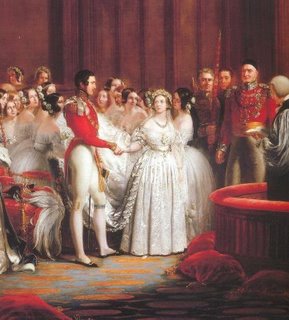
Queen Victoria and Prince Albert were married in the chapel at St. James' Palace in London, which is OK, I guess. In their time there hadn't been a wedding at the Abbey in over 400 years, since Richard II in 1382. The tradition was revived in the 1920s, and almost every major British royal wedding has taken place there since. Every coronation since the Abbey's construction has taken place there, too.

I shuffle into the kitchen and try to make some tea (keeping with the British theme, of course) with my fancy new French press tea pot (birthday gift--in fact, I've decided that the royals planned the wedding on this date as their celebration of my birthday, which is only two days away). My sleep-addled brain can't figure out how the tea pot works, though, so, frustrated, I pour some of yesterday's coffee into a mug and shove it into the microwave for two minutes, then settle on the couch with my blankie.

The boys' choir is singing now. There's something so magical about a boys' choir. Like, it must have taken an enchantment to get those boys to sing. I also love the trees down the aisle. Whose idea was that?

I think the best part really is the dress. I love the lace and the silhouette and mostly I love the fact that it has sleeves! Finally! Maybe now brides will stop wearing skanky, ill-fitting strapless dresses that have become ubiquitous even in winter and wear something that actually looks good! Thank you, Her Royal Highness the Duchess of Cambridge, for bringing classy back.

Diana's dress was very different indeed. Puffy sleeves, sparkles, ruffles, a mile-long train. That was a lot of dress. She pulled it off, but not many girls could have.

I've finished my cup of coffee now and decided to give the tea another try. Abandoning the fancy tea pot, I just heat water in the microwave, add the tea leaves to brew for a little bit, then strain the tea into my cup with a spoon. A pinch of brown sugar and a drop of cream and it's perfect. I think I'll enjoy it with an apple oat muffin.

The bride and groom are exiting the church now. It's a looooong walk. I hope they have comfortable shoes. I think everyone should get to ride in an open-air horse-drawn carriage at least once in life. I personally would like one for everyday use. As the carriage heads toward Buckingham Palace, I'm told by an American entertainment news anchor who is proud of her research that it is now time for the "Countdown to the Kiss."

What she refers to is a tradition for British royal weddings for most of the past century: the newly married couple greets the people from the balcony of Buckingham Palace. The Queen kept this tradition herself during her wedding to the Duke of Edinburgh, when she was still Princess Elizabeth, back in 1947. And the current Prince of Wales and Diana expanded on it with the addition of a kiss, a real crowdpleaser.

The new Duke and Duchess don't disappoint the crowd, and after a few more minutes of waving and smiling, it appears that it's all over now. That's just as well. I've just witnessed a once-in-a-generation event, and even though it'll take me a week to get back on a normal sleeping schedule, I wouldn't have missed it for a kingdom.

Wednesday, February 23, 2011

Snow and Churches and Chocolate Milk

1. Currently, there are bucket loads of snow falling out of the sky, coating the grass and even the pavement in a thickening blanket of stark white. When I was younger (OK, like a year younger) snow was reason for jubilation. Today, I'm just wondering if I'll be able to drive up the hill to get home.

2. Last night, a friend and I went to Calvary Community Church in Sumner for their young adult service. It was our first time there, and we already decided we're going back. We sang an old hymn, and it's been going through my head today. This is my favorite part:

Why should I gain from His reward?
I cannot give an answer
But this I know with all my heart:
His wounds have paid my ransom

It sounds really awesome accompanied by bass and drums and electric guitar.

3. Chocolate milk is delicious, especially with chocolate chip cookies.

Thursday, January 06, 2011

Revelations in the Choir Room

To celebrate my 75th blog post, here is an advance sneak peak at the project I'm working on now. Enjoy!


Many defining moments of my high school years happened in the choir room.

“What are you reading?” I asked my friend Jamie one day (in the choir room). I feel pretty confident, and not at all over dramatic, in saying that that question changed my life.

Now, when I say that my defining moments happened in the choir room, I mean that I was a choir kid. Yes, a choir kid. I was one of those kids who walked through the halls singing Broadway tunes and Schubert art songs alike at the top of my lungs with the other choir kids. One of those kids you probably told to can it, or pushed into a locker, or politely ignored, or even secretly admired, when you were in high school. We weren't trying to be annoying, honestly. In my case, at least, the joys of high school life were just so overwhelming that they often manifested themselves in effusive bursts of song. I couldn't help it.

Something wonderful happens when you sing with a choir, when all the parts come together into one voice, and you can feel the notes and rhythms sliding and swirling around you, and the music fills the room until your breath is vibrating with it. And then, just after the song has ended, it still hangs in the air for a split second, reverberates through the vast space of the universe and back to the closeness of your beating heart, before fading to silence. It's that fraction of a second, that echo that makes it all worth it. There is no thought, no movement, just the lingering remnant of an enchantment just ended.

It is that remnant, I think, that made the choir room such a magical place. And maybe it was because of that magic that I was fated to ask that life-changing question.

Sunday, November 07, 2010

Rhonda Watts Christmas Gift Guide: 2010 Edition

I love buying gifts for other people. At Christmas, I'm usually more excited about the gifts I'm giving than the ones I'm receiving. I love going to a store and finding the perfect present--something that I know that person will love, but that they probably wouldn't think to ask for. And then I love wrapping the gifts in paper and finding ribbon or a bow to coordinate, maybe with a gift tag that matches.

And I love watching people open their presents. I can always tell by someone's reaction whether he or she really likes what I got or not. And when I can see that they really love what I gave them, that is the best feeling for me, because it shows that I know them well enough and care about them enough to pick something out for them that they would have picked themselves.

I know that not everyone shares this feeling about gifts with me, and that's OK. But for anyone who's planning to get me a gift this Christmas and is at a loss on what to get, here are a few things that I really want this year, followed by a list of some other ideas. What's on your Christmas list?

This is what I want...

...to watch:

Bright Star
The title comes from a poem John Keats wrote to Fanny Brawne, and it is their relationship that this movie follows. I guess you could call it a biopic, but it's actually Brawne, not Keats, who is the real protagonist. She starts out like an Austen heroine, in a good family that has fallen on hard times, but she has the misfortune of falling in love with a man of great poetic genius, but no fortune. Brawne was also a fashion designer, creating all her own clothing, and the film highlights that well in the costuming.


The Unusuals: The Complete Series
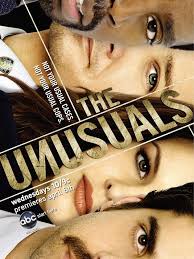
A tragically short-lived police drama that lives up to its title in every way, starring Amber "Joan of Arcadia" Tamblyn, or Ambie Tambie as I affectionately call her (or would if we were actually friends). Tamblyn plays a trust fund baby who dropped out of Harvard to go to the police academy and join the NYPD. Jeremy "Hurt Locker" Renner plays her slightly more seasoned partner, whose old partner met an untimely and violent death under mysterious circumstances. The show has great characters, snappy dialogue, and inventive storytelling. Why ABC canceled The Unusuals but kept Grey's Anatomy is one of the mysteries of the universe.


...to read:

Half the Sky
(Kristof & WuDunn)
Former New York Times writers Nicholas Kristof and Sheryl WuDunn subtitled their book "Turning Oppression into Opportunity for Women Worldwide." The phrase "half the sky" comes from a Chinese proverb: "Women hold up half the sky." Kristof and WuDunn's argument centers on the idea that the most effective way to improve life in the third world, and all over the world, is to value and educate young women and girls. The book lays out an agenda for the world's women and three major abuses: sex trafficking and forced prostitution; gender-based violence including honor killings and mass rape; and maternal mortality, which needlessly claims one woman a minute. Half the Sky is both a strategic plan and a call to action that I can't wait to read.


Zombies vs. Unicorns (Black & Larbalestier)
This anthology contains 12 stories, each of which argues the case for either zombies or unicorns. I'm a little vague on which criteria zombies and unicorns are being judged on. Which is better? Which is more awesome? Which one would win in a fair fight? Which one would win in a prison fight? Maybe it's all of those things. That would be great, actually, because it might help me make up my mind. I mean, unicorns are awesome and they go great with rainbows and glitter, at least on Lisa Frank notebooks. But if you look at some of the old legends about unicorns, they're not always friendly, benevolent creatures. They're kind of shady and mysterious. At least you know where you stand with zombies. And as for who would win in a fight? I don't think we'll know until we see it.


...to use:

Sephora Gift Card
Have you ever been to Sephora? I know it's been around for quite awhile but I've just discovered it. It's like a Wonderland of Makeup! It's quite intimidating when you first walk in, but after you pass the displays for Dior and Givenchy and get into the more affordable brands, it's pretty fun. You can give yourself a makeover or have a professional give you one. They have everything you could ever need in your makeup bag. And, their gift cards come in these cute little mirror compacts.


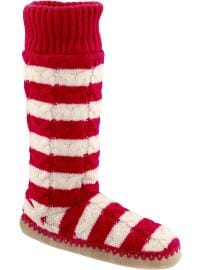
Old Navy Sweater-Knit boot slippers
These come in lots of cute patterns and colors, but my favorites are these Cat in the Hat/candy cane/elf stocking-inspired red-and-white stripes. You just tuck your jammie pants into the tops for warm and cozy feet all the way down! They make me want to curl up with some cocoa and watch A Christmas Story...


Amazon Kindle 2 skins from DecalGirl.com
Decal Girl makes great protective skins for any device you can think of. I had one on my old iPod, I have one on my laptop and one on my Kindle right now that's getting pretty scratched up. But the cool thing is you can peel them off and put another one on. I like the designs "Spring Flower," "Quest," "Library," "Crest" (pictured), and "Orange Flowers."


Here are some more ideas--

Books:

Nonfiction

  • An Education (Barber)

  • Things That Make Us [Sic] (Brockenbrough)

  • The Age of Wonder (Holmes)

  • Where Men Win Glory (Krakauer)

  • The Immortal Life of Henrietta Lacks (Skloot)

  • The Elements of Style (Strunk & White; any edition)

  • Fifth Avenue, 5 A.M. (Wasson)

  • A Room of One's Own (Woolf; any edition)

Fiction

  • Alice I Have Been (Benjamin)

  • Ragtime (Doctorow)

  • Shades of Grey (Fforde)

  • My Brilliant Career (Franklin)

  • The Summer We Read Gatsby (Ganek)

  • A Total Waste of Makeup (Gruenenfelder)

  • Never Let Me Go (Ishiguro)

  • The Pursuit of Love & Love in a Cold Climate: Two Novels (Mitford)

  • Miss Pettigrew Lives for a Day (Watson)


DVDs:

  • 30 Rock Seasons 3 & 4

  • Beauty & the Beast

  • Dollhouse: The Complete Second Season

  • Gattaca

  • Glee: The Complete First Season

  • In Bruges

  • Into the Wild

  • The IT Crowd: Seasons 1, 2 & 3

  • The Proposal

  • Sherlock Holmes (2009)

  • State of Play

  • The Sound of Music

  • The Twilight Saga: Eclipse

  • Where the Wild Things Are

  • Zombieland


Apparel:

  • Knit hats

  • Scarves

  • Gloves


Gift Cards/Certificates:

  • Amazon.com

  • Barnes & Noble

  • Borders

  • Old Navy

  • Kohl's

  • The Body Shop

  • Kelly Latte's


Charity:

I would also appreciate donations made in my name to the Somaly Mam Foundation, a nonprofit public charity committed to ending modern day slavery around the world. The foundation supports rescue, shelter and rehabilitation programs across Southeast Asia, where sex trafficking of women and girls, some as young as five, is a widespread practice. www.somaly.org/donate


We all like stuff. Stuff is fun. And I really do think there is some value and significance in the stuff that we choose to give each other, not in the things themselves, but in the thought and care behind the choosing of those things. I always hope that things I give to people will show how much I care. And of course, we can never forget the real reason that we give each other Christmas gifts in the first place: the Gift of Christ.

Sunday, October 31, 2010

Upon Re-reading "Twilight"

Two years ago, I wrote this. If you don't want to follow the link, don't worry. I'll explain--no, wait, there's too much--I'll sum up. The link was to a previous post on this blog in which I expressed my thoughts on first reading Twilight, including a fun anecdote in which the moment I read the last word on the last page, I immediately sprang up, grabbed my car keys, and booked it to the nearest store to buy a copy of New Moon, the sequel to Twilight. In the post I also express a half-awareness of the book's "guilty pleasure" status, yet I remain shameless (mostly).

And now, two years later, I've had time to read the book a couple more times, to see the movie (could have been better, could have been worse), and to distance myself for awhile from the entire phenomenon (as long as I wasn't within 50 feet of a preteen girl, or the mother of a preteen girl). And I would have to say that my opinion of the novel has not altered fundamentally, though time has given it cultivation and nuance.

You know how there are some books that could be page-turners because they're such great stories, but you don't want to read them that fast? They're so good that you just want to take your time, to soak in the prose and study every detail of the characters. For me, The Girl With the Dragon Tattoo is such a novel (so far), but Twilight was not.

Stephenie Meyer has stated on several occasions something to the effect of, she does not consider herself a writer, but a storyteller. I wholeheartedly agree with her. Keeping in mind that Twilight was her first novel (and I would imagine speedily written, having rather famously appeared to her in a dream a la Mary Shelley's Frankenstein), her prose and her characterization do leave something to be desired. But where she is not lacking is in her ability to tell a compelling story--just try to not stay up far later than your intended bed time while reading this book--and to set a mood.

Twilight is probably one of the moodiest books I've ever read. I was entirely captivated by the setting, a gloomy, romantic, fairy-tale-enchanted-forest kind of setting. Every tree in the town of Forks is dripping with angst and mystery. (Forks is a real town, by the way, to which I've been, both before and after it became a mecca for Twilight fans--I live about four hours away by car. The real Forks isn't nearly as interesting as the fictional one.)

Meyer could not have picked a better location to set her tale, though. Forks is right in the middle of Washington state's Olympic National Forest, one of the only remaining old-growth forests in North America. It's the kind of forest where you would expect to find a cottage full of dwarves, or maybe a vampire.

There was an article in the March 2010 issue of Discover Magazine that was actually about Dutch scientist Frans Vera's concept called "rewilding," but there was a lot about old-growth forests in it: "Today thick, dense forests are considered synonymous with unspoiled nature," but old-growth is "a human artifact: an unnatural, unbalanced outcome created when people...corralled wild horses and cattle. Without free-roaming herds of grazing animals to hold them back, closed-canopy forests took over the land wherever humans did not intervene."

It's an intriguing concept, though one that takes away a little of the romance of all those Grimm tales, and maybe some of the enchanting mystery of Twilight. In the Grimms' tales and in Meyer's tale, the woods are dangerous, haunted by wolves or witches or other unknown terrors. But, if Vera's theory is to be believed, the dark and dangerous woods were created by human activity; we gave the monsters a place to hide.

What a poignant metaphor that is! Twilight doesn't spend a lot of time delving into any kind of psychological exploration, and it barely scratches the surface of the primordial roots of vampire tales throughout human history, but who wants that kind of boring stuff in a fantasy novel?

And Twilight is that: pure fantasy. It's the kind of novel that's a lot of fun if you don't think about it very much, and maybe even more fun if you do.

Monday, October 25, 2010

Disparity

I once heard the author Mary Clearman Blew say something to the effect of, most people don't have the humility to write about their childhoods until they are at least middle-aged. I don't know that it requires humility, though. Blew's point was, I think, that until someone has lived a certain amount of time, she does not have the wisdom or clarity of sight to look at the experience of childhood, with all its joys and desperate heartbreaks so uneventful to the grown-up mind, as honest narrative, rather than the confusion of half-true facts and guarded memories we see in young adulthood. In other words, it takes time to take our childhoods seriously.

There is too slight a disparity between ten and twenty for a young adult to completely detach herself from the wildness, adventure, and wonder of being a child, and the danger that is no less real for being imaginary. And there is too great a disparity for her believe in that world still.

My childhood is full of stories. My earliest adventures were with the likes of Madeleine and little girls in lines, the Poky Little Puppy and Ferdinand the bull. I explored a split-level tree with the Berenstein Bears, and I sailed through night and day and in and out of weeks and almost over a year with Max and the Wild Things, time and again. A few years later I made fast friends with Laura Ingalls and Sara Crewe and Anne Shirley. And I discovered Narnia rather by accident, just as Lucy did. These were the stories that mattered to me. These are the memories that are most vivid in my mind's eye.

I've lived my life through books. When I was child, the imaginary worlds of orphans and talking animals (for an orphan was to me as strange and mystical a creature as a talking animal), of gloom and brightness and magic, were far more exciting, and far more bearable, than the real world.

In the real world there was school, which had by turns its delights and its atrocities. There were trips to the lake, to the park, to the library, to any other number of interesting places. There were slumber parties and marathon games of make-believe (that wasn't what we called it, but that's what it was). But most of all, in the real world there was the seemingly endless drudgery of living. I was a child for a hundred years.

I couldn't wait to grow up.

When I imagined myself grown up, I pictured an impossibly beautiful and sophisticated woman. At five, I didn't know the word "sophisticated," but that didn't stop me from idolizing the concept. And, inevitably, I suppose, the adult me of my mind's eye often resembled some variation of a Disney princess, a heroine from a book, or a Hollywood actress.


(To be continued...)

Tuesday, October 05, 2010

New Job, Old House

So as much of my innermost circle of readership knows, I received and accepted a job offer today. I'll be hanging out at the Kent Historical Museum, doing a little bit of several things. Needless to say, I am beyond excited. I mean, I finally have a reason besides caffeine withdrawal to leave the house every day! And I'll be able to put my blogging skills to more prestigious use, it seems.

I am so thankful, and God is so faithful. I was on the brink of giving up on finding a job that I could really get excited about, and that I could even use my degree in. But here it is, my first real, permanent job right out of college and it's doing something really cool. This is definitely a blessing!

Monday, October 04, 2010

Creepy was Will's Forte

Two weeks into the 36th season of Saturday Night Live, I'm sure many viewers are wondering, “Where's Forte?” At least, if you don't follow entertainment news very closely and you actually noticed that Will Forte's cache of creeper/weirdo characters were absent from those two episodes. He left the show after eight seasons to “pursue new opportunities,” according to a representative for Forte, as quoted in The New York Times about a month ago.

By opportunities, does he mean a MacGruber sequel, by chance? I hope not. There are only so many SNL sketches-turned-movies that the wonderful world of film can contain, and I think we reached the limit right after Wayne's World 2, or maybe somewhere in the middle of it.

But, if Forte is looking to reprise one of his former roles for the big screen, here's a look back at some of his best/creepiest SNL characters, any of which would be just as suitable as MacGruber for a movie franchise:

The Falconer Businessman Ken Mortimer left his career and his home to live in the wilderness with his best friend Donald the falcon, and so became... The Falconer! The most cringe-worthy edition was the Jason Lee episode's Indecent Proposal parody. Yes, Earl Hickey making out with a bird puppet. I had nightmares for weeks.

Tim Calhoun The awkward, camera-shy politician with little to no public speaking ability ran for president in 2008 as the Write-in Party candidate. He appeared on Weekend Update to talk about his stance on issues like the economy—“Put a bag over its face, shotgun a few beers, and then just get it over with”—and the oil crisis—“Drill, baby, drill? Not on my teeth! I hate baby dentists.”

Jon Bovi They are NOT a Bon Jovi cover band! Jon Bovi is the world's first Bon Jovi opposite band. All of their songs are exact opposites of Bon Jovi songs, like “Not Wanted, Alive and Dead,” “Dyin' on a Prayer” and “(Your Hatred is Like) Good Medicine.” For some reason, probably the economy, Jon Bovi hasn't yet been able to sign a gig.

Mr. Dillon (From the “Gilly” sketches) The “Gilly” sketches, starring Kristen Wiig as a school-aged, afro-ed troublemaker, seem like something from Mad TV. They're extremely weird, not actually funny unless you're really sleepy (or high), and yet you can't stop watching them. Forte played the creepy (of course) mustachioed teacher who failed to discipline Gilly for her destructive and violent behavior. Wow, this sounds more like a TV M-rated drama on HBO than a comedy sketch...

I, for one, would gladly pay full price to see a 90 minute version of one of these sketches. Of course, Entertainment Weekly reported back in June that Forte will guest-star on Amy Poehler's sitcom Parks and Recreation this upcoming season, starting in January. But there's still time for a full-length Tim Calhoun feature. Calhoun 2012!


Saturday, September 25, 2010

What Second Novel Slump?

Lost in a Good Book
By Jasper Fforde, 2002
Preceded by The Eyre Affair

Something Blue
By Emily Giffin, 2005
Preceded by Something Borrowed

Speaker for the Dead
By Orson Scott Card, 1986
Preceded by Ender's Game

The Likeness
By Tana French, 2008
Preceded by In the Woods

Pride and Prejudice
By Jane Austen, 1813
Preceded by Sense and Sensibility

Hey, I just realized that all of these are at least semi-sequels except for P&P. Interesting...

Wednesday, September 15, 2010

A Little Cross-Promotion Never Hurt Anyone

Exciting news: I started another blog!

Yes, it seems the supply is greater than the demand, but I don't care. I have been noticing how many of my posts on Watts Up With Rhonda are in some way related to Jane Austen, so I decided to start a separate blog for my Jane Austen stuff and keep this one for everything else. I haven't decided yet if I'm going to dig through all my posts here and transfer the Austen ones over to the new blog, or just start fresh.

Anyway, you should check it out. It's called Austentatious, and there's only one post right now, but plenty more material for discussion!

Wednesday, August 25, 2010

So Prejudiced it Becomes Prideful

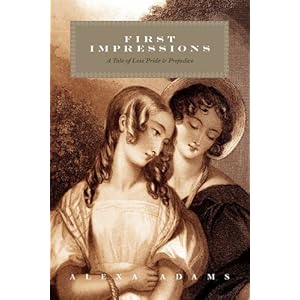
A review of "First Impressions: A Tale of Less Pride and Prejudice" by Alexa Adams


While I found this book entirely readable, let me just say right off the bat that the Kindle edition at least has major punctuation issues and even some spelling errors. At one point "Darcy" was spelled with an e between the c and the y! Are the shades of Pemberley to be so polluted? (Sorry, I couldn't resist!) I also found myself exclaiming out loud, a la Mrs. Elton, "There is a shocking lack of commas in this narrative!" It seriously drove me nuts.

Anyway, issues of grammar aside, as I said, the story is very readable. It also explores a question that I'm sure a lot of P&P lovers have asked themselves: What if Mr. Darcy had manned up and danced with Elizabeth when they first met at Meryton, instead of waiting until the Netherfield ball, when her prejudice had already been solidified by the evil manipulations of Mr. Wickham? Everyone's been wondering that, right?

Well, I actually have before. There are a lot of things in P&P that leave room for what ifs. Like, what if Bingley had gone against Darcy's initial advice and proposed to Jane anyway? Or what if Elizabeth and Lydia and Kitty and I can't remember exactly who else was there had not met Mr. Wickham in town that day? What if, when Lizzy and the Gardiners were in Lambton, Jane's letter had arrived a day later?

I love the idea of changing the course of an entire story by just adding or changing one element. I thought this was done rather well in "Lost in Austen", which had a modern 20-something woman change places with Elizabeth Bennet. This threw off the entire plot, and the main character's attempts to "fix" it only made things worse. In this case, the changed element made the story more complicated, added more conflict, thus making it more interesting.

But the opposite is true for "First Impressions." Its subtitle really tells it all: "A Tale of Less Pride and Prejudice." But, you see, the pride and the prejudice are what make it "Pride and Prejudice." The Mr. Darcy in this version of the story does indeed have less pride. There is much less conflict, none at all, in fact, between Darcy and Elizabeth because they communicate perfectly with each other from the beginning. (I mean, what kind of person says exactly what they mean? What kind of game is that?) It's all very pleasant, but in fiction pleasant is boring.

I was pleased enough with the pleasantness to finish the book, because I love the characters, and for the most part, the author stays true to them. But I doubt I'll give it a second read. From now on I prefer to keep my what if speculations off the page (or Kindle screen). Except for, what if Caroline Bingley is a Terminator, a cyborg sent back in time to terminate Elizabeth Bennet, the future leader in the defense against zombie uprising...

Friday, August 20, 2010

The CIA is Still a Runway

“Covert Affairs” has never had pretensions of greatness. This rather frothy CIA drama from a girl's POV is usually good for a few laughs and some spy-lite fun. This week's episode, though, was a bit of a snooze. A side story line features CIA newbie Annie's suspicions of her brother-in-law's infidelity. This whole element of the show, with the sister and the nieces, doesn't really work for me, especially the nieces. It's like they're not even real kids.


Now that that's out of the way, I think there has to be a great drinking game somewhere in this show. Like, every time Annie is shocked when she learns a secret about her new mission? Shot! Or whenever she uses her exceptional language skills to befriend a foreign blue collar worker? Shot! Or how about every time Auggie uses his blindness to charm a woman? Shot! (Remember Jamie Foxx in “Ray”? Christopher Gorham does!)


Yes, the show is a bit rife with cliché, but it usually does a better job of hiding it than this episode did. This week Annie again went undercover as an employee of the Smithsonian, this time to gain access to a senator's office that's been leaking state secrets. To get in good with the senator's (young, female) chief of staff, Annie compliments her sweater and takes her out for margaritas and some girl talk. Turns out the way to a woman's trust is through her wardrobe. And margaritas.

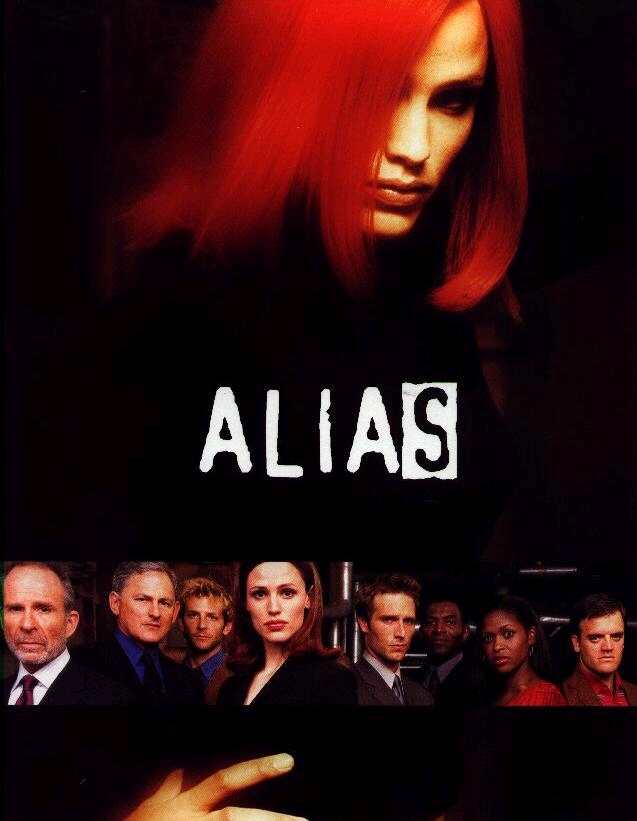
It's becoming more and more clear to me that this is a chick show. Not just a show for a female audience, but a chick show. Comparisons to “Alias” are inevitable, I suppose, and the similarities are deeper than one might think. Yes, women loved “Alias” partly because it didn't talk down to them; it didn't water down the action with lots of extra heartwarming drama. Plus there were all those crazy clothes and fun wigs. The most exciting wardrobe choice Annie ever makes is her Leboutins. Fabulous, but predictable.


But both “Affairs” and “Alias” happen to feature complex women. There is a strange combination of strength and naivete, intelligence and vulnerability in the female characters, just like real women, I suppose. Is “Covert Affairs” a feminist manifesto? Gertrude Stein certainly wouldn't think so. But what woman doesn't love Leboutins?